
Playful Parenting: Building Confidence Through Playful Games
Children learn resilience and self-esteem when grown-ups turn challenges into playful parenting techniques. Play isn’t just fun – it’s a powerful way to help kids “learn to control their lives, solve problems … and become emotionally resilient”.
In play, kids experiment with power and make mistakes in a safe space. As one psychologist notes, “free play … helps children cope with stress” and practice emotional regulation. Parents can use games to specifically build kids’ confidence and silence their inner critics.
These include silly name-calling games, cooperative nail-cutting games, “celebrate losing” games, and more. Over time these playful strategies boost self-esteem and help children feel in charge of their feelings and experiences.
Why Play Builds Confidence
Playful games give children a sense of mastery. In play, kids can practice getting things right (or wrong) over and over without real consequences.
The American Academy of Pediatrics explains that play “improves children’s abilities to … regulate emotions” and even helps them “cope with stress.”. Similarly, experts emphasize that laughter and imaginative play help release tension so kids can tackle fears and disappointments in a lighthearted way.
Researcher Peter Gray writes that for children, free play “is the primary means by which children learn to control their lives, solve problems, get along with peers, and become emotionally resilient.” In other words, when children laugh through challenges, they learn they can handle setbacks.
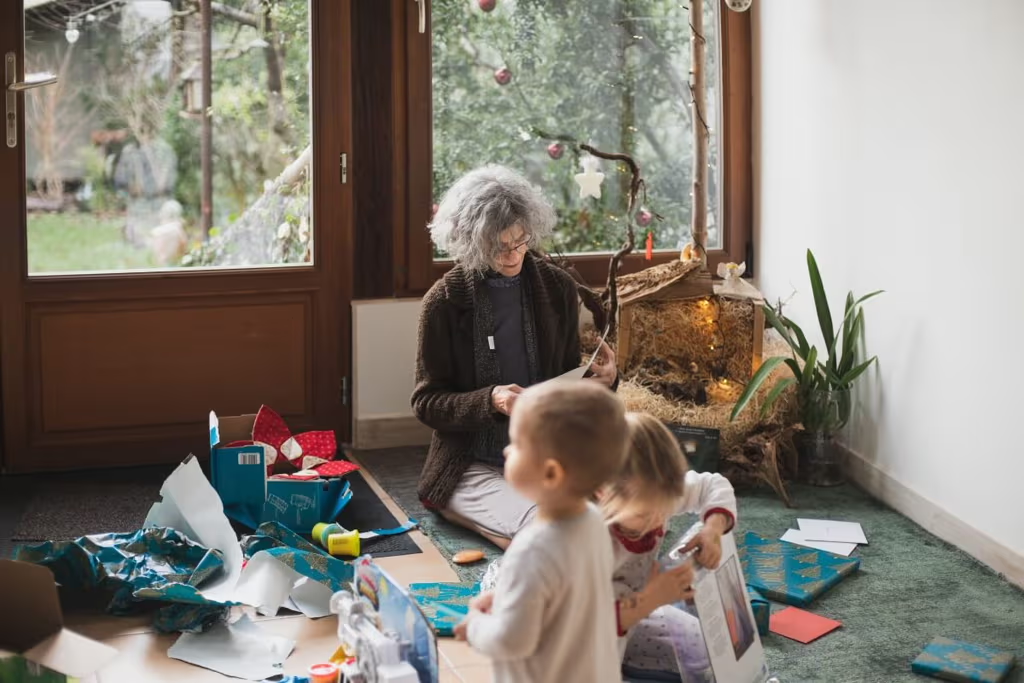
Equally important, play helps kids believe in themselves. When parents follow the child’s lead (instead of lecturing or scolding), a child naturally feels accomplished.
As parenting experts advise, “Play is also a time for building self-esteem”: let your child direct the game, praise their efforts, and don’t criticize. This sends a message: “Your ideas are good enough; I’m proud of you.” Even rough-and-tumble play has benefits – it “not only brings parents and children closer but also unlocks creativity and encourages confidence in children”.
In short, play literally invites children to practice success, failure, and problem-solving – all key to self-confidence.
Specific Confidence-Building Games
Use these concrete game ideas to tackle self-doubt, big emotions, and fear:
-
Big Hairy Dwarf (Name-Calling Game): Turn insults into laughter. If a child calls you a name or uses a swear word, lean into it playfully. For example, say with a grin, “Fine, say anything you want – but if you call me ‘Big Hairy Dwarf’ I’ll be so mad!” Most kids then gleefully shout “Big Hairy Dwarf!” back, and you pretend to fake-lose your temper in an exaggerated way. This game lets children vent frustration without real conflict. Rather than scold them into feeling ashamed, the child experiences power over the situation and often laughs off their upset. This playful twist reduces self-doubt because the child feels heard and in control.
-
Stop-and-Go Nail- or Hair-Cutting Game: Make routine grooming (like nail-trimming, haircuts, or doctor visits) a cooperative game. For instance, hold up a clipper and say “Snap when I say GO!” Every time the clipper tip touches the nail, freeze and say “STOP!” Give the child control: only snip on your “GO.” This Stop-and-Go approach gives them a role in the process, turning a scary moment into a team activity. Parents can adjust the pace – stopping when nerves flare, and resuming once the child is calm. These creative approaches to everyday challenges, like nail trimming, “reinforce confidence in children and foster trust”. Over time the child learns that “grown-up tasks” aren’t monsters, and that they can manage them.
-
Victory Dance and Lost-and-Found Games: Help kids navigate winning and losing with fun rituals. For example, let the coin-toss loser perform a silly “drama scene” about losing (think Shakespearean faint or a goofy dance) and have the winner do a triumphant victory dance. Other ideas: when your child loses a game, encourage a playful “time-out dance,” or cheer on good effort. The key is to remove shame from losing. Teach that effort and creativity matter more than “winning.” Kids can make up their own goofy celebrations of defeat. In the long run, this cultivates resilience: they learn to laugh at mistakes rather than worry, which builds inner strength. (As Cohen emphasizes, the goal is “positive reinforcement and playful engagement” even when the child is frustrated.)
-
Pretend Play to Defeat Fears: Use make-believe to help kids cope with fears or embarrassing moments. If a child fears taking medicine or saying goodbye, you might play-act the scenario first. For example, use dolls or plush toysto act out the situation: “Let’s pretend Teddy needs a shot – would Teddy cry or laugh?” Or let the child “play doctor” on you, reversing roles. In storytelling games, the child is the hero overcoming dragons of fear. This form of play therapy gives them mastery: psychologists note that letting kids control a fantasy scenario can “boost a child’s sense of personal power and confidence”. When children imagine themselves conquering the scary part, even just with toys, they often feel braver in real life. In short, playful storytelling is a gentle game for helping kids overcome fear through play.
-
Roughhousing and Active Play: If your child enjoys physical play, gentle rough-and-tumble can build confidence in their body and abilities. Try safe wrestling, pillow fights, or piggyback rides – staying aware of limits. Research shows that active play “unlocks creativity and encourages confidence in children”. When parents play this way, children learn they can handle exciting situations and even tease a little, then bounce back. Of course, always follow safety and watch comfort levels, but the physical laughter and joy from such games naturally build a child’s sense of “I can do that!” and “I’m safe even if I fall.”
-
Voice Changing and Role Reversal: To quiet a child’s internal critic, mix up roles or use funny voices. If a child says, “I’m not good at this,” playfully respond in a goofy voice: “Oh no, is that the Soggy Face Goblin talking?!” Rename challenges (“Box-of-Terrors nail clipper”, “Monster of Mess”) and pretend that only silly noises can tame them. When kids do something wrong, some parents give it a whimsical name rather than scold. Cohen encourages “mock threats mixed with humor” so kids relax and “want to fix it” instead of feeling ashamed. For example, if a child spills juice, you might say dramatically, “Ah! The Juice Monster strikes again! We must team up to defeat him!” – and then play cleanup as a game. These techniques make mistakes feel less personal. Slowly, the child internalizes encouragement and gains confidence in trying again.

Play Equals Practice in Confidence
All these playful parenting games give children “practice” at being brave, creative, and in control. In formal play therapy for self-esteem, therapists often use sand trays or art to let a child control a tiny world – and kids naturally feel stronger by doing so.
In everyday life, we can do the same with games. When a child gets to call the shots in a game, or even pretend to boss you around, they feel a surge of personal power. This repeated sense of power silences the self-doubt bit by bit. As one therapist notes, “when we feel like we’re stronger than a challenging experience, we’re more confident”.

Above all, be your child’s playful partner. Let giggles guide the lesson – even in frustrations. Play gives children a chance to release big emotions in a fun way (turning tantrums into tickles, frustration into funny faces). It is, as the Harvard Center on the Developing Child explains, a key tool for building resilience to hardship. Over time, kids who regularly play out their worries and power struggles with a loving parent grow into kids who believe in themselves.
In short: By turning upset, fear, and even failures into games, you send a clear message: “You can handle this. We can laugh at it together.” That message – delivered through play – builds a child’s confidence like nothing else. Every time your child wins a pretend duel, makes you laugh with a silly name, or conquers a “scary” nail clipper monster, they learn, “I am brave. I am powerful.” Those are skills that last long after the game is over.